Wednesday, 26 March 2014

Information Flows: Outsourcing

Upon reading about offshore outsourcing in the IT department, I found it interesting that The Philippines is emerging as one of the "hotspots" for call centres. This is the article that talks about the reasons behind Philippines becoming a desirable place for call centres.

In the article, it is said that Filipinos make good call centre agents because they can appeal to the American customers because of their ability to emulate the American accent.

It is also said in the article that Filipinos enjoy working for call centre despite the "unsociable" hours, because they can get paid more than their alternative jobs - namely, nursing and OFW jobs. The average wage is Php1000 per session, which is twice the minimum wage.

Furthermore, this Greenfield Geography website made a chart about the reasons why TNC's outsource. One of the reasons is to cut costs, as seen in the chart below. A way in which these corporations cut costs is by paying the workers in developing countries a lower wage.

Along with the benefits of call centres, there has been some criticism as to the exploitation of labour in developing countries. This raised a question in my mind, which is:

If the workers are earning more than what they normally would (a.k.a minimum wage), do the call centres deserve the criticism that they receive about exploiting workers? Has the "happy medium" been achieved with regards to what the workers should receive and what they actually receive?

Tuesday, 18 March 2014

On multi-governmental organisations: "20 years on, does NAFTA need an overhaul?"


Summary of the Article:

As the North American Free Trade Agreement (NAFTA) turns 20 years old, there has been some evaluation regarding its success and downfall. The three economies have benefitted from NAFTA in terms of employment, however Mexico has since received between $15 billion to $20 billion in foreign direct investments from a previous $3 billion, and now exports $1 billion per annum. However, behind its success, NAFTA has experienced some criticism about opening up markets and competition.

My thoughts:

Although NAFTA seems to be greatly benefitting Mexico the most, the free trade agreements may be causing a loss of sovereignty. This could be a result of the United State's influence in NAFTA, because they have the greatest economic output, therefore they have the strongest foothold in the flow of goods and services. What this could mean is that if at any point the US does not benefit as much as they would like, they have an economic advantage over Mexico, so Mexico essentially has to "trade" in favour of the US. This way, Mexico looses sovereignty because despite being able to trade freely in order to maximise their economic gain, they much also be aware of the implications that their actions have on the US (or even Canada). In my opinion, they are not gaining as much as they potentially could, merely because they have a smaller economic output compared to the US. 

Furthermore, despite the criticisms about NAFTA, opening up markets and allowing competition is always more advantageous than setting up trading blocks that limit the flow of goods and services amongst willing and able nations.

Link for the article:

http://www.dw.de/20-years-on-does-nafta-need-an-overhaul/a-17453191

Friday, 14 March 2014

How has KitKat intentionally and unintentionally spread consumerism through cultural diffusion?


Consumerism is colloquially used as a word that describes the encouragement of purchasing goods and services at a larger amount and with more frequency.  On the other hand, cultural diffusion can be classified as the voluntary change in aspects of a certain culture.


Let's take a look at the transnational corporation, KitKat.  Originally, it was a brand that could only be found in England, however, globalisation has caused its global popularity to increase. Now kitkat can be found internationally.

So how has KitKat spread consumerism through cultural diffusion?

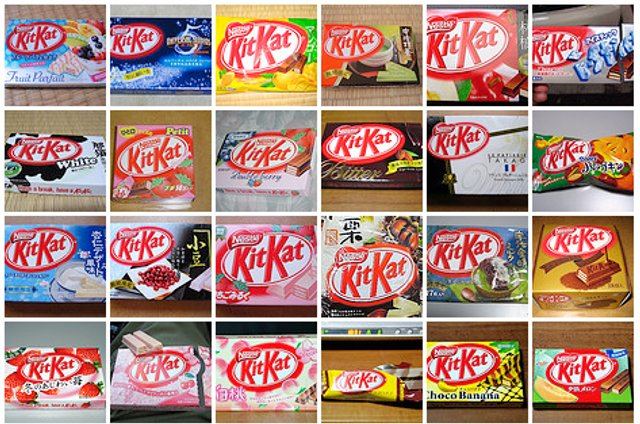
Since it was originally a western company, its products did not appeal to the typical customer in eastern (Asian) countries. So to increase its range of customers, KitKat created a number of new flavours that would appeal to its global customers. 24 of these flavours can be seen below. The flavours include: Green Tea (Japan), Bubble Gum (Japan), Royal Milk Tea (UK), Tiramisu (UK), Banana (Canada), and Honeycomb (Australia).

Through these new flavours, KitKat is encouraging consumerism through cultural diffusion. They are appealing to the culture of the customers, and are therefore encouraging consumption. And since the customers are interested in these flavours, they are inclined to purchase them. So this becomes a voluntary change in purchasing and consumption.


KitKat is not alone in their pursuit of encouraging consumerism. Many transnational corporations intend to increase their scope of consumers, often to ultimately increase profit. Cultural diffusion is an effective method in doing so, because both the consumers and the corporations are benefitting. The consumers enjoy the satisfaction of familiarity, whilst the corporations enjoy the satisfaction of more consumers and more revenue. And lastly, more revenue encourages innovation, therefore new ideas will continue to flourish, so these new ideas will continue to encourage consumerism through cultural diffusion again and again.


Monday, 10 March 2014

Pros and Cons of Globalisation

Pros

Space-Time Convergence.
  • Space and time is seemingly shrunk with increased communication amongst family members, friends, and business people.
    • Skype & other social networking sites.
  • Increased availability and accessibility of information in online databases.
    • Google, Wikipedia, etc.
Increased international awareness.
  • Leads to more awareness of ongoing global issues and charities.
    • Unicef.
  • Opens up the platform for global collaboration with rescue and relief.
    • Typhoon Haiyan (Yolanda) person finder.
    •  
Increased trade amongst countries.
  • Aids in overall economic growth and development, as well as the increased demand for foreign products.
  • Creates diversity within countries and people.
  • Ultimately increases productivity and efficiency because of comparative advantage between countries.

Cons

Makes illicit trade more ominous and widespread.
  • This type of trade is growing 7 times faster that "normal" trade, and is predicted to account for 10% of world trade.
Increased gap between rich and poor (MEDC and LEDC).
  • Leads to the exploitation of the LEDC's
    • Nike has been criticised for outsourcing employment in LEDC's and exposing workers to extremely dangerous environments.
  • MEDC's ultimately have more power, they have a larger foothold in the global market.
  • Strain on resources have caused the LEDC's to gain control of an LEDC's natural resources.
    • Oil.
Increased global communication --> abusing the benefits of the internet.
  • Increased illegal activity online.
    • Child pornography & more communication about human trafficking.
  • Online black markets.
    • Purchasing of illegal drugs & increased accessibility of illegal downloads.
  • The anonymity of the internet has allowed for more online bullying.
Loss of cultural identity.
  • Certain ideas are becoming more dominant than others, and are causing a loss in cultural identity and decreased cultural sensitivity.
    • Plastic surgery in order to look like a certain race, tanning lotion, whitening cream, etc.