Consumerism is colloquially used as a word that describes the encouragement of purchasing goods and services at a larger amount and with more frequency. On the other hand, cultural diffusion can be classified as the voluntary change in aspects of a certain culture.

Let's take a look at the transnational corporation, KitKat. Originally, it was a brand that could only be found in England, however, globalisation has caused its global popularity to increase. Now kitkat can be found internationally.
So how has KitKat spread consumerism through cultural diffusion?
Since it was originally a western company, its products did not appeal to the typical customer in eastern (Asian) countries. So to increase its range of customers, KitKat created a number of new flavours that would appeal to its global customers. 24 of these flavours can be seen below. The flavours include: Green Tea (Japan), Bubble Gum (Japan), Royal Milk Tea (UK), Tiramisu (UK), Banana (Canada), and Honeycomb (Australia).
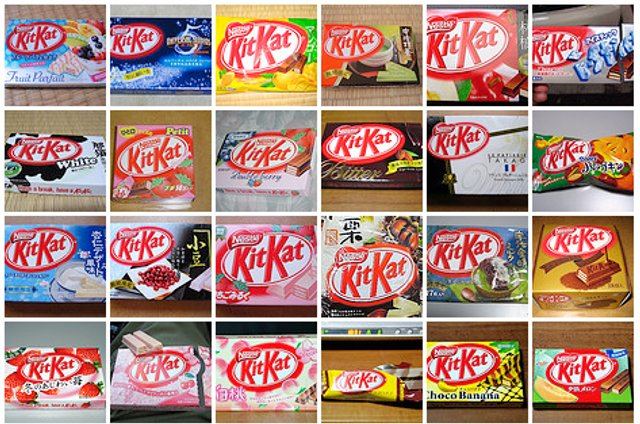
KitKat is not alone in their pursuit of encouraging consumerism. Many transnational corporations intend to increase their scope of consumers, often to ultimately increase profit. Cultural diffusion is an effective method in doing so, because both the consumers and the corporations are benefitting. The consumers enjoy the satisfaction of familiarity, whilst the corporations enjoy the satisfaction of more consumers and more revenue. And lastly, more revenue encourages innovation, therefore new ideas will continue to flourish, so these new ideas will continue to encourage consumerism through cultural diffusion again and again.

First thing, just real quick. The TNC is Nestle. Apart from that, I thought your list of different Kit Kats in different countries was great. Have you tried them all? By the way, your last sentence really makes you sound like an anti-malthusian.
ReplyDeleteHey Dani! :) i would like to think that Nestle would be culturally diffusing for the same of the consumers, however, we all know that companies do these different methods for their personal gain. or in other words "for profit". but i do agree with you, in that, Nestle (Kit Kat) can use different methods to culturally diffuse.
ReplyDelete